Tuesday, June 07, 2011

Arvon


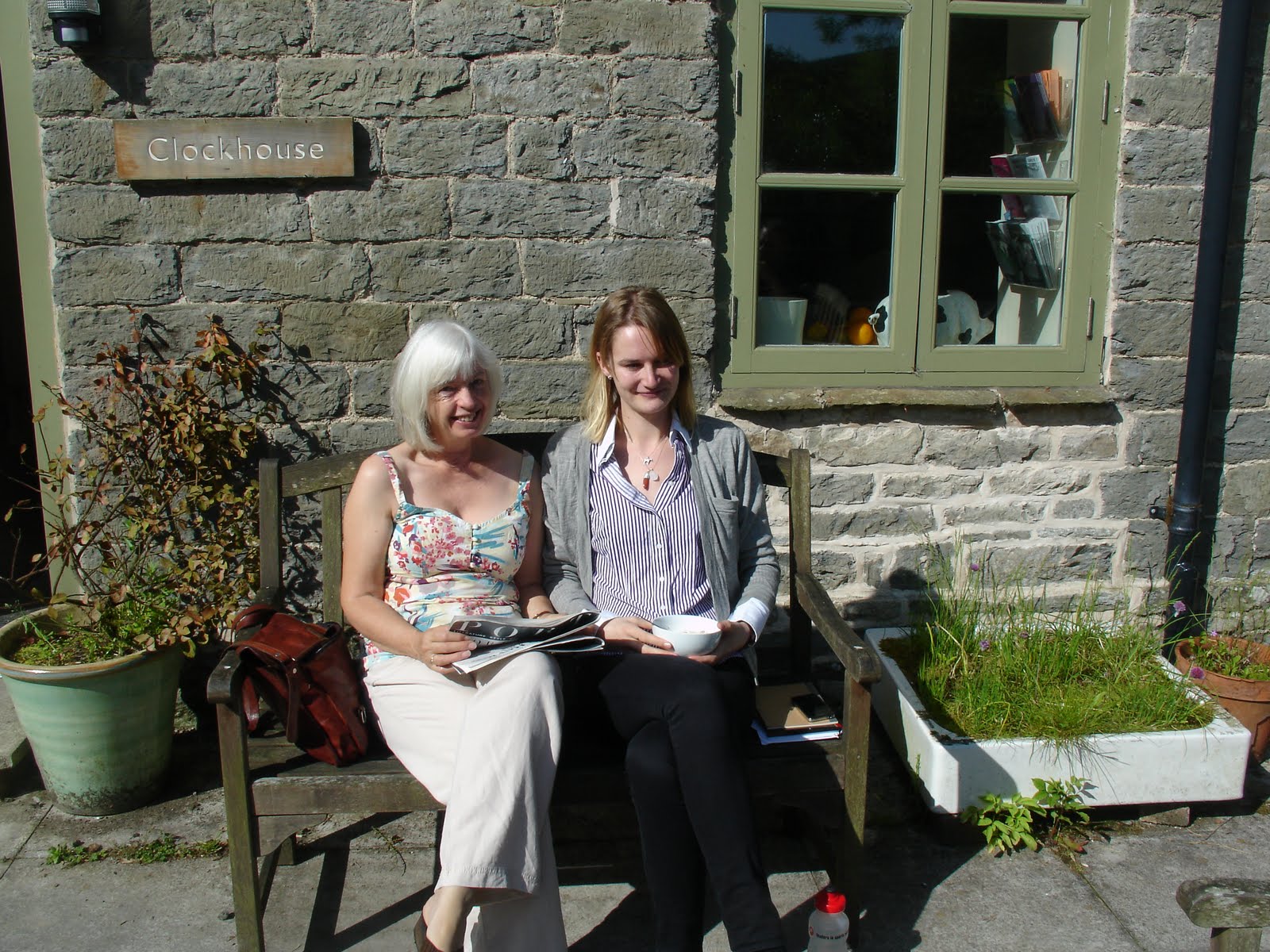
Some images from my stay at the Arvon Foundation - before Christmas 2010 at Lumb Bank in Yorkshire and in late May/early June 2011 at The hurst in Clun, Shropshire.

Leviathan

A short story I wrote just before going on n Arvon Foundation course.

LEVIATHAN

“All those stars both silvery and golden shall shine out again”
Walt Whitman

An image as lucid as a photograph. My brother’s body vaulted high in a vast rise of water, vanishing amid a tumult of splintered light amid sudden walls and the lurching gape of cathedral spaces. A final image. Shutter in the mind snapping shut.

My shrieks drowning in the roar of the night and the gulp of salt.

But this is no photograph. Those images fade. This replays in slow motion in my mind. Night after night. Year after year. Always vivid seventy years on.

A memory that revivifies that first ocean-dark despair. Afterwards amid the bobbing remnants of the ship there was just the struggle to survive – and long hours of drift and desperation. Hot grief, sodden cold and gnawing hunger. Empty lifeboats nearby.

Eventually helping hands hauled me aboard something adrift and the balm of a precarious sleep took me, cradled on the bourne of the deep.

But out there lost forever, both my brother and the ebb tide of faith.

But I survived along with a handful of others. Until we were received back into the realm of life.

After that, the long years of remembering and forgetting - trying to honour the future we’d taken for granted as children and appreciate the wealth of the long life I have been given in the aftermath.

He was seven and I was eleven. Refugees being shipped to safety from the darkening dangers in wartime London. He was lost. I was finally found, out there in the Atlantic waters. But much else was lost.

Now I am eighty-one. A widower living alone. My family are dispersed. My wife long ago gone and my sons living far away. One in the North, the other in Canada, the country that should have become our temporary homeland. But for that night.

Everyday now I wake early. In the growing dawn sit quietly cradling a teacup and listening to the birds chattering on the lawn. Noisy magpies today, stealing the calm of the early hours. And further away the ever-present murmur of the sea.

People talk of the habits of a lifetime, but new behaviours modified by age overlay them and become the new habits of this late segment of a lifetime. Today as for some years now I await the arrival of the morning paper. The gate will squeak open and I will hear the thud on the doormat.

It is the same newspaper I have read since adulthood. It has changed of course. But so have I. Now it is trawling for younger readers. The reviews of music I have never heard and the denizens of a dozen fashionable worlds I have never heard of make the paper a briefer read. But its snapshots of the troubles of a troubled world still dismay me.

Then a light breakfast. That has changed too. My appetite is diminished and my digestion less easy.

With marriage and children and a demanding profession, there were structures and patterns. But they were the warp through which the crazy weft of events drove to offer a life that never seemed predictable.


Now long into retirement more evident patterns emerge. Today, for example, I will walk to a pub near the shingle beach. With other men, who to outsiders appear like me, we will discuss the affairs of our town and of the world. Much of what we discuss will aggravate us. But we do know clearly that any power we had to change the world, if it were ever within reach, is long gone, like reaching out in the tumult of the sea.

My wife Margaret used to hold me on those nights when I awoke wracked by nightmares. Now I face these nightly dreams alone.

The town I now call home is by the sea. My house is where that community begins to straggle back into the countryside and where the cliff, surmounted by a lighthouse, begins to swell.

Is it strange of me to choose to live here, beside the element whose casual brutality so transformed my life? I think not. The old so often choose to live by this transformative element, the protean sea catching the disquiet of old age,

For me absence has been so profound that it has offered a way to navigate the mysteries of life. Faith otherwise drowned in the sud and foam of the ocean.

My son Robert lives in Scotland with his wife Joni and their two children, my grandchildren, Britney and Max. They do not visit often and I no longer travel.
But Robert bought me a computer and a webcam and so, each week. we spend some time talking via the screen. An electronic telescope bringing my scattered family into focus. Modern technology amazes me.

It also enables me to see that even more distant son – my oldest –who lives in Toronto. Jimmy is now a Canadian. He was named in memory off my brother.

And so another anniversary of that day has passed. I have just one old photograph of my brother taken when he was still a toddler. A smiling child sitting with our mother.

But that was long ago. Another lifetime. Things split off after he drowned. I was finally returned home to my parents. We never got news of James. No official confirmed his death. The sea and the swirling tides of wartime swallowed him entirely.

Until my son telephoned me early one evening.

I had just awoken from my habitual late afternoon siesta into early evening dark. I was still caught at the bottom of what was always now a long ascent. Usually it took an hour to return to wakefulness from a sleep that never refreshes but whose onset was not to be resisted.

“Pop”, he began. It always irritated me. This Americanisation. Why not dad, or father, or almost any affectionate diminutive? But I bit my tongue. His voice now had a North American tang.

“Pop, are you sitting down? Please sit down. I’ve some strange news.“ The cautionary note set me on edge.

“I am sitting down. Now tell me, what is wrong.”

“Nothing Pop. Nothing wrong. But erm, what I am going to tell you could be a big surprise. Heck. I wish I could talk to you face-to-face.

“Yes – what is it Jimmy? This news. Are you and Maxine okay? Has something happened? Is someone ill?

“No – no its nothing like that. Let me tell you what happened exactly as it happened. Its probably the best way.”

I listened without comment.

“My agent had a letter a few days ago. From a man living in the Northern part of Canada. A small place called Labrador City. I’d never even heard of it. Anyway this guy… somehow he tracked her down – from one of the TV shows I appeared in. “

My son Jimmy is a very minor celebrity in Canada. He appears in television drama, usually in supporting roles. He hasn’t yet made the big time and, in all probability, he never will. So not a star, but illuminated enough that his face prompts feelings of familiarity from strangers in his hometown.

“She gave me the letter when I went into her office a couple of days ago. Pop…. It’s from a man who says he thinks he is related to us.”

“Related? Well he can’t be a close relation. You’re the only Canadian bit of the family that I know off though I suppose there might be a distant cousin there somewhere.”

“Er no Pop. You see this guy reckons its something much more astonishing. He says he thinks we might be first cousins … that you are his uncle and, and… “At this point his voice took on a sense of strain as if the words would hardly leave his throat.

“I think I get it, “ I said.

Yes Pop… he, he thinks that his father is your brother… that you both survived… I know. I know. Seems impossible. And yet…well, he says he grew up like we did, thinking that this father’s brother had downed… but you didn’t. And so it seems possible crazily possible that somehow he survived as well.

I said nothing. The full gravity of what he was saying was rising up into me still. The impossibility and yet… I felt a rising nausea.

“Pop…. Perhaps you and he both survived that night. Do you think that is possible?”

I spoke softly with a sense of calm that belied my inner feelings. “No. It isn’t possible. I saw him lost. This must be a mistake or a lie. Someone who knows what happened and is lying.“

“Why would anyone do that? And how would they know? I know it’s not a family secret but its also not ‘out there’ is it – not something that is public knowledge. Really it’s just the family that knows – you, me, Robert – the girls.
I don’t think I ever really talked it to anyone, even as a kid.

“Dad… look. Maybe it is true. And if it is, don’t you feel we have to know? I want to know. Robert will want to know. I’m sure of that. You know, I figure what will probably be best is for you have to come here and meet him. “

“I don’t think so. I don’t travel anymore. You know….”

Pop. Thank about it. What if t really is your brother. How do you actually feel about the possibility it just might be true. I mean it is true then this is astonishing. You and he would have so much to catch up about. A whole lifetime. I mean, that is like, just amazing isn’t it?

“Calm down Jimmy. You know this can’t be true, surely. I don’t see how it could be,” I said. “I know what happened. I saw it. He cannot have survived. And Jimmy, as I say, I don’t travel anymore. I am too old. Just too old. I think we all need to take a deep breath here and ask what this is really about. Yes, we do need to know more. It might just be a crank or someone being malicious. You want me to travel half way across the world for that?

But in truth as I paused and awaited his reply I felt knowledge taking shape inside me. It was as if somehow the Red Sea of time was parting. And on the further shore…


“Pop…. I agree and I do think it is important for you and for us all to find out the truth here. The only way to be sure will be for you meet. And it has to be you who comes here. This guy, this man who may be your brother is old and far frailer than you. He’s in a home. Who knows how long he may have. Can you stand to not know? To not have him back. If it IS your brother.

“Even just to be sure… to know that the past as you understand it is maybe different. Maybe ….

I remained silent a moment and then I put the telephone down. It rang again and I ignored it.

How was I to make sense of this? Could it possibly be true? What was I to do with this? I felt the image of the water and that thin helpless arm embraced by turmoil reaching out and vanishing. I felt the maelstrom alive and real within me.

The telephone rang again and again. Finally I answered it again. It was my other son.

“Dad, Jimmy called me. He’s worried the news has shocked you. Are you all right? Look I am going to head down to see you tomorrow….”

“I am fine, Bob. “ And with that again I placed the phone back in its cradle.

I went to my computer. Found images of the region. Ice and haunting light and men in work shirts. An alien, hard and strange way of living.

Late that evening to escape the telephone I walked out and down to the sea. To be alone with my thoughts.

The streets were empty. A single street lamp cast a circle on the asphalt and beyond the scrub leading to the beach.

High above the town, the lighthouse blinked, guiding ships beyond the teeth of the sea to the deceits of the land. An ocean merging past and present, melting geography.

And so I walked out beyond these lights onto the moon blanched shingle strand, looking out at the tranquil bay.

Piercing the dark roiled clouds The Pleiades were suspended glistering clear. I feel something returning. A homecoming. The growing surge of a new tide.


C John Kelleher 2011

BAHRAIN - impressions from my first visit

Some five years go we were commissioned to make two films for the Government of bahrain - one was to promote tourism. The other was about it's progress towards a full democratic system of Government. The events of the past few months have underscored the unease we felt even then. This is what I wrote but never published.


BAHRAIN

The tiny young woman behind the cafeteria counter leant forward to talk to us confidentially. “Can you get me a job in England?” she asked, “I have a friend there somewhere.”

She was from the Philippines – one of thousands of young women who arrive throughout the Mid East region each year. They come to do poorly paid jobs working in the lowest echelons of society for Arab families and employers. Little of their income makes it home to their families for usually they have first to repay their employers the cost of getting to the region.

“I hate it here,” she added,” Please if you know anyone in England who wants a maid let me know… please.’

There are hundreds like her in Bahrain – girls from the Philippines and young men from the Indian subcontinent who find their lives increasingly intolerable as members of the imported working class in this tiny Arab nation – a scatter of islands off the coast of Saudi Arabia.

In the past year sixty young women – mostly from the Philippines – have fled their jobs alleging cruelty by their employers. A refuge for the girls has been set up in Manama, the island’s capital city.

Many allege beatings and of sexual abuse by their Arab employers.

But for all that, the girls in the shelter are among the luckier cases. This October, the local English language newspaper reported another case of a group of young girls trapped in this self-styled “pearl of the gulf.”

These girls had escaped their employers but without passports or money they were in limbo – unable to go home until the high price paid by their Bahraini families for their getting them to the island had been repaid.

But Bahrain’s immigrant workers are luckier than those from some of the other members of the Gulf Co-operation Council Nations.

Over Ramadan Saudi Arabians cross the causeway from their nearby homeland to flood into Bahrain for weekends. They bring with them less fortunate, young Filipinos who would have no escape route from their employers. These maids arrive trailing little Saudi Arabian children behind their employers, rich Saudis vacationing in Bahrain from the pious prison nation that is their home.

If they fall out with their Saudi employers, often because of sexual abuse, they have virtually no recourse. Complaints to the police would bring them imprisonment.

Thousands of Saudis descend on Bahrain every weekend and then for the long celebration of Eid al Fitr, at the end of Ramadan, Islam’s closest counterpart to Christmas. They stay in hotels where they can drink alcohol before boosting the nation’s road accident statistics. Every day brings wrecks involving young Saudi men – often very drunk.

Sometimes though it is Saudi wives at the wheel of the SUVS or shiny Mercedes. Most are novice drivers. In Saudi Arabia they are banned from driving at all but here they often have to drive their drunken husbands from one hotel to another.

One American businessman watched in shock and awe as a young Saudi woman, shrouded in her all-over black abaya, practiced driving on a piece of wasteland near their hotel – before zooming precariously out into the evening rush hour in Manama.

Everyone knows of the miseries of life for all but the most devout Moslems in Saudi Arabia.

Bahrain, a little kingdom with long ties to the West, seems in prospect, a far happier place. Presently it is furiously promoting itself as a tourist destination - hoping to draw new visitors to see its meagre historical sites, its tourist hotels and it poor beaches.

Bahrain’s virtues are few. While it lacks the intense modern face of Dubai its people are genuinely less aloof and warmer to that different class of visitors – the tourist. Bahrainis drive taxis, serve you in restaurants and, for the large part, speak English.

In the evenings the cafes are full of men laughing and drinking coffee and
enjoying long and fragrant hours smoking the water pipes called sheesha in these parts. Many play dominos.

In the early winter as the temperatures become cooler the ‘camping season” gets underway as families opt to leave the dusty city and towns and many spend weeks camping in tents – while the men motor back into the cities of Manama and Muharraq or smaller places like or issa Town to work.

After sunset during Ramadan the island’s few shopping malls are jammed with families. The giant Seef mall boasts an indoor playground area where chortling children enjoy rides while proud fathers in Taubs and women in black abayas look on.

Pretty little girls are allowed to dress as any child their age – until adolescence sees them ushered, for the most part, into the black shrouds that wreathe Moslem women.

In Bahrain in common with the United Arab Emirates girls can dress in western clothing, but most prefer to wear Abayas – some cut very stylishly and trimmed with patterns, but others loose and shapeless gowns with fully veiled faces or mere eye slits… the Niqab favoured by the more devout. Some even wear black gloves.

In the early evenings the corniche in the capital is full of families picknicking and little boys playing football. Bahrain presents a moderate Moslem face to the world – a place of relative tranquility.

But appearences are deceptive. This is a far from happy country – and one whose fault lines lie not far below the surface. Its’ people are caught between Iran and a hard place. The Shi’ite Republic and Saudi Arabia offer alternative models of how Bahrain could end up as its wealth peters out.

Bahrain would prefer to model itself on the success of Dubai a few miles away across the Gulf.

The main volatile ingredients bubbling away in Bahrain are religion, greed and uncertainty as it seeks new sources of income. One model is to be a tamer but more stable version of Dubai – building its new future on attracting Western investment.

Building is underway across the country – especially in the capital – where the “dual” towers of the Financial Harbour complex and the smaller but more vivid architectural venture of the World Trade Centre are both symbols of its desire to pull in investors dubious of the hyperactive growth of Dubai.

The phrase “financial harbour” is both the name of a development and a metaphor used by local politicians and entrepreneurs for the more stolid and dependable financial climate they claim for Bahrain.

But Bahrain’s leaders lack the élan and imagination that is driving Dubai into its pole position in the region – allied to the still vast oil resources of its fellow Emirate, Abu Dhabi.

Bahrain has long since spent its oil wealth and now depends upon the charity of Saudi Arabia to keep its refineries ticking over. Its other resources are limited.

One much touted resource is its new status as a democracy – one of the few of any sort in this part of the world. The Emir of Bahrain, who came to power in 1999, decided to transform his little country into a constitutional monarchy – and so became King Hamad Bin Isa al Khalifa.

Women were given the vote, freedom of speech was enshrined in the constitution, and other reforms were introduced. The democracy is, in fact a very limited one with real power still residing firmly in the hands of the royal family and their appointees.

But nevertheless the idea seems to be to convince Western governments and businesses that the king means business, that the place is now a stable democracy and worthy of inward investment.

Freedom of speech has certainly enabled local people to discuss, in guarded terms, the greed of their rulers.

The Khalifa family has long ruled Bahrain. Until recently they were near absolute rulers, but were content to call themselves Emirs. Now as a constitutional monarchy, portraits of the King, the prime minister (his uncle) and the crown prince that stare of billboards across the country are ubiquitous and oddly reminiscent of the portraits of obviously less benign middle eastern despots such as the late President Assad or Saddam Hussein.

Bahrain’s citizens now have the right to vote and will, in 2006, take part in the nation’s second general election.

But there are no political parties here. The main rift line is between the Islamists, who dominate the present parliament, individual interests and the Shi’ite majority who largely boycotted the last elections. It is still uncertain if they’ll participate this time around.

Not that much power rests with the elected assembly. There are 40 members and their constituencies were carefully contrived to prevent any real risk of representation. Some constituencies return two representatives but have a handful of voters. Others return one MP for ten times as many constituents.

Real power resides firmly with the royal family. The prime minister, a job for life, has been held since the 1960s by the present king’s uncle. And the king has the power to overrule anything the assembly might agree upon and to dissolve parliament if he feels things are out of hand. His family have controlling interests in most of Bahrain’s profitable concerns.

The parliament is completed by an upper house of 40 members, all directly appointed by the King and his court, which reinforces the values he dictates.

But things have improved. Public demonstrations are allowed – though they quickly get out of hand suggesting the depth of anger smouldering in this little country. This December a demonstration, notionally over unemployment became a riot after masked men – thought to be police – beat up the key organisers.

Other demonstrators supporters rioted and in the chaos following police tear-gassed protesting crowds who ran amok in running battles. Drifting clouds of gas forced the closure of a race meeting and police cars were set ablaze in the Souq – one of central Manama’s few attractions for visitors.

The police and army feel no loyalty to their fellow Bahrainis because they are, for the large part, mercenaries – tough men recruited from other Muslim countries to defend the Government.

Such disruptions are rare. When the king introduced democracy, dissidents were freed and welcomed home and women now have the vote.

Democracy is portrayed as benefiting many Bahrainis. But it seems more likely that its advent is designed primarily to play to outside investors - especially Western businesses. Here is a safe financial harbour for their money goes the refrain with neither the reigious extremism of Saudi Arabia or the flashy but insecure ostensiousness of Dubai. Bahrain is stolid and progressive.

Naturally economic reforms are of special benefit to the extended Khalifa family. Most of the major businesses on the island are owned by this dynasty. The Prime Minister, for instance, is reported to have bought some empty land for a dinar – about £1.50 - and later sold it to developers for millions.

He owns Bahrain’s top hotel, the Ritz Carlton, many others hotels, and other businesses including a shopping mall.

But some reforms can backfire. The press is now free here and recently the public were shocked after reports that the Prime Minister had told a courtier – who then passed his remarks on – that the Bahraini people were “like a rug and should be always walked upon.”

Portraits of this gentle soul gazes out at his people from posters the length of the land.

Meanwhile the devil is in the detail. Bahraini men for instance can no longer call themselves Bin…meaning son of … at least formally. That honorific is now the preserve of the royals of the land.

Equally Sheikh, a general name denoting the senior male member of the family, is also denied mere commoners. Only the Khalifas and their kith and kin can enjoy this title these days.

Meanwhile name registering is increasingly important. Every Bahraini carries an ID card and it’s all being turned into one of the world’s most efficient electronic systems.

It’s a good test bed for this. There are only around 300,000 people living here and soon their CPR cards will be linked to a central computer and all their life stories will be available to the authorities – health, tax, and much more. Other larger nations are studying this experiment with interest.

But for all this things have been liberalised. There are fewer people who get bumped off in the night for instance.

The government is anxious to persuade outsiders to invest here – rather than the flashier prospects of adding their finances to the shining towers of Dubai. So the new freedoms are proclaimed loudly.

But one respected intellectual – who manages to tread a line between the establishment and honesty – revealed that he had a foreign passport in case ‘things changed’ and said that at least now people did not vanish in the night to be returned dead to their families in the morning as had happened under the rule of the present King’s father.

And one young man recalled his own experiences of that much-loved ruler’s real nature. He once strayed with a young friend into the route of a royal motorcade. Police surrounded his car, dragged the two teenagers from their car and at gunpoint hauled them to the Emir’s Rolls Royce. An electric window slid down and they found themselves gazing at the ruler.

Slowly he spat into the faces of each boy and ordered them taken to prison.

Four long hours they were detained without contact with their family – and were only released when it was found they were from “good Sunni families’.

Interestingly it is actually ordinary Sunni Moslems who most dislike the royal family now – for they’ve traditionally enjoyed the bulk of the nation’s wealth while the Shiite majority have done more menial work.

Wary of the growing attachment of the Shia to outside forces – code words for Iran – liberalisation brought greater visibility and opportunity for this group. Their religious festivals were even featured on TV to the shock of a public who’d never before witnessed the bloody spectacle of self-flagellation involved in many Shia religious festivals.

Divisions between the Shia and Sunni are less sharp here than in many other countries but even young Bahrainis educated in the West still offer a loathing of the Shias when probed.

One young Bahraini, a successful businessman educated in Canada confessed: “As far as I’m concerned they’re not even Moslems”

Cars with pictures of Ayatollah Khomeini can be seen on the new highways of Bahrain offered visible support for the fear that the Shiites of the country look elsewhere for their inspiration.

The Shias themselves keep quiet about their poltical ambitions, though are probably similar to those in others parts of the mid-east, - content to be law abiding citizens but by tradition, ready to rise up if the opportunity presents itself and seek power.

But the Sunni Moslems are also challenging the King’s bid to enrich his family with western investment. The influence of the devout Muslims in the government prompted the King to impose an extraordinary last minute ban on hotels in Bahrain selling alcohol in the evening to their guests throughout Ramadan.

Hoteliers met with government ministers after the holy month to complain it had cost them millions. Some who’d defied the band were then ordered to stop selling alcohol until further notice.

Their ire was focused particularly on the man who’d had to enact the ban, the minister entrusted with the task of promoting tourism. In response he said they should realise tourism is about more than alcohol in hotels – and that their ideas were wrong.

But what is there in Bahrain to attract tourists?

One key thing is a sense of safe haven from the more troubled parts of the region. So far Al Queda’s only known attempt at a terrorist outrage here was stopped in its tracks years ago. Nevertheless the US gulf fleet who’re based here decided to send wives and children home after 9/11. There are few visible signs of US personnel around the capital.

There are plenty of westerners though ,joining the Saudi weekend exodus to swim and eat and drink, when they’re allowed, in Bahrain’s many luxury hotels. The pools are good but Bahrain has no beaches.

Few will stray out to visit the so-called attractions. There is the Souq in Manama but it has none of the exotic appeal of ancient Kasbahs in older Arab cities. Its mainly junk sold by the island’s vast and hard working immigrant population from India and Pakistan. There is also a small gold market – patrolled by armed guards.

For Westerners living in Bahrain the social life is limited. Many join the handful of British based social clubs in town. There are no bars to visit save those in hotels – which are said to be full of Russian and oriental prostitutes.

Manama itself has no other visible nightlife. The best restaurants are undiscoverable without local connections or based in five star hotels.

Otherwise the culinary delights are familiar ones.

In the islands three main shopping malls there are familiar global fast food outlets. The Seef Mall for instance has a Burger King and MacDonald’s next door to one another – and women in veils are tugged, like mothers around the world, to these places by their addicted kids. But hamburgers are off the menu at both places. Downstairs there is a Starbucks and the smell of Kentucky Fried Chicken wafts across to the Baskin Robbins concession and the Papa John’s pizza bar. Apart from the veils and accents you could be in Cardiff or Columbus Ohio.

The traveller in search of attractions other than shopping and water sport has slim pickings. There are a handful of badly preserved forts from colonial times, a good but small national museum, an old mosque and a grand new one, a dusty nature reserve with a few drab Oryx, antelope and non-exotic birds and a few other rather dull sites offering the paltry remains of the little understood Dilmun civilisation.

One for instance is the largest gravesite in the Mediterranean with thousands of burial mounds of the vanished Dilmun civilisation. In photos and in reality they look like sand piles. Many locals have never even stopped to look at them.

One proud natural wonder for tourists is the so-called tree of life. It’s a lone tree that grows in an otherwise barren part of the island’s interior. It was long said to be 3,000 years old – a botanical miracle. Recent tests have reveals its actually only 300 years old. It is a pleasant enough tree, though surrounded by garbage.

There is of course the Bahrain International Circuit. It opened for business and hosted its first grand Prix event last year. Tens of thousands visited for that – the Middle East’s first setting for motor sports.

More recently locals attended a long weekend of motor sports, drag racing that turned into a risible non-event as thousands jeered during hours of delays and technical breakdowns.

But for much of the year the circuit stands empty – a shimmering showcase that springs to life for a brief season each year. In 2006 it will open the world’s grand prix season – an achievement but one that scarcely touches the lives of ordinary Bahrainis.

It is part of the Khalifa Empire. In every major business and walk of life members of the Khalifa family own a share of the action and are often key members of the operation.

Bahrain is not a place of natural beauty. And development has removed much of the sort of period charm visitors might have found a brief distraction. The old town of Muharraq, near the island’s airport, once had the taste of an old Gulf culture with houses on the edge of the blue sea.

Landfill, which is underway across the island, has now moved the old houses inland where the drab and dusty alleys and lanes now have little appeal for visitors. Bulldozers and Indian workers now crowd the new foreshore amid a frenzy of building work going on across the island.

Bahrain ‘s owners have their sites set on becoming as modern as Dubai, especially if they can win back some of the money which once landed here after the island took over from Beirut as the Middle East’s banking capital . Now it floods into the coffers of the mirage across the waters in the UAE.

Bahrain is a curious country. Like most of its neighbours around the Gulf for the bulk of its history, one century was much like another. It was perturbed by the influx of foreigners – other Arab invaders who brought it Islam early soon after the hegira ion the Arabian mainland, the Portuguese and the British. But its people grew dates and made money from the harsh rigours of pearl fishing.

Until it became the first place in the region where oil was discovered. Pearl fishing had by then been overturned by the Japanese industry of cultured pearls. Oil quickly averted a catastrophe for Bahrainis and the oil revenues soon flowed to make Manama the first Middle Eastern oil boomtown.

It’s virtually all run out now and Saudi Arabia now gives Bahrain the entire output of one of its fields.

Bahrain’s single biggest success story is a thing called Alba… the world’s biggest aluminium smelting plant. It does offer awesome industrial statistics.

And it has Gulf Air, run by an Australian who commutes to London each week. His family live there and his children are being educated in England.

James Hogan has a tough job ahead. Gulf once served many of the oil rich sheikhdoms around the gulf, but one by one they are leaving – with just Qatar and Bahrain still supporting the airline. The emirates now have their own airlines and Abu Dhabi has the recently founded Etihad. Despite winning kudos as one of the world’s top 10 airlines, Gulf ‘s boss was barred from picking up his prize at the wards ceremony in jealous Dubai.

Old rivalries run deep here - fault lines not just inside nations but also between them

One of the shiniest developments in Manama is the financial harbour – dual office towers that will, at 53 stories, be by far the tallest buildings on the island – and will be outshone only by the scores of towers planned or already in place in Dubai.

Dubai though recently banned adverts for the new Bahraini venture on their cabs. And the Crown prince of Dubai still keeps secret the precise final height planned for the new Burj al Dubai under construction there. It will be the world’s tallest building – more than a mile high – give or take an undisclosed few feet.

Bahrain was once moving towards becoming part of the United Arab Emirates along with Qatar. At the eleventh hour it decided to withdraw – leaving the oil rich nation of Abu Dhabi to dominate the emirates.

Many Bahrainis rue that decision as its economic fortunes decline. A report published recently forecast 35 per cent unemployment in Bahrain within the next few years unless dramatic action is taken.

Inevitably economic woes like this breed further divisions. The government has an official programme of Bahrainisation of the workforce which will be bad news to the thousands of indians who work here on construction sites and in other manual labour and send money home to the sub-continent.

Already they attract sneers and dislike from many Bahrainis. Deepening recession could turn sneers to jeers or worse.

Eventually as Bahrain’s financial fortunes shift, and its citizens tighten their belts, girls like the Filipino who asked us to help her find work may no longer have the option of coming to this formerly oil rich nation.

Hopefully she will find a way home or out of her present dead end job that is less tragic than that of another young woman.

It was towards the end of the Holy Month of Ramadan that another young Filipino maid decided she could no longer stand the life she had with her Bahraini family. A virtual prisoner in their apartment she decided to literally climb to freedom.

But instead of escape she found death. She jumped or fell from a second floor window.

Sunday, June 05, 2011

Edward Gorey

Image removed as requested

Cleopatra - revised links

Two linked features Published in May in The National in the UAE about the Northern Ballet's production of a new ballet Cleopatra.

http://www.thenational.ae/arts-culture/on-stage/cleopatra-reigns-at-the-ballet


Cleopatra Ballet
Published by The National in the UAE May 2011

What do we really know of Cleopatra, the tragic final pharaoh of Egypt who seduced the two most powerful men of her era, Julius Caesar and Mark Antony, and struggled to protect her Empire from Roman domination?

Over the centuries countless creative works have fed the myth of the femme fatale and obscured the historical facts.

“Pretty much everyone thinks they know about Cleopatra, but they don’t really know who she was at all, “ says David Nixon, artistic director of Britain’s Northern Ballet and creator of “Cleopatra”, a new full length piece of dance theatre. “And that provides a choreographer with a great deal of scope.” His aim was to get closer to the real Cleopatra.

“We don’t even really know what she looked like or if she was actually a great beauty.” An Egyptian coin is the only confirmed image of Cleopatra though a bust in a Berlin museum shows a woman who may be Cleopatra with her hair in the popular roman style of the era.

And yet the some of the most beautiful actresses of stage and screen have been cast to play this beguiling woman – icons such as Elizabeth Taylor and Claudette Colbert.

In the Northern Ballet production, a newer beauty plays the Queen, the American ballerina Martha Leebolt. Nixon built the ballet around the 28-year-old. The dancer, who moved to Britain ten years ago from her native California, has just been awarded the title of Britain’s Outstanding Female Ballet Performer. She sees Cleopatra as her career highpoint.


“What an amazing story. She is such an iconic woman. You couldn’t really ask for a better part to be created on you - to have Cleopatra be your ballet. She was such a strong and powerful woman, especially for her time when men ruled everything. To be able to play such a commanding woman on stage is hard, but is really rewarding.”

The music is by the French composer Claude-Michel Schonberg, whose successes include two international hit musicals “Miss Saigon” and “Les Miserables”. He first worked with Nixon ten years ago when the Canadian choreographer took over as artistic director of the company.

The company is based in the Yorkshire industrial city of Leeds. “Cleopatra” is their first new ballet for two years and is touring Britain this spring and autumn. Nixon, one of Britain’s most prolific choreographers, was awarded an OBE last year for his work with the company and its dance academy.

Nixon and Schonberg’s first collaboration was “Wuthering Heights,” originally intended for another dance company. “I was quite new to the job and the chief executive said he had been sent this CD of a score for “Wuthering Heights” by Schonberg.

“ At first I was a little bit…I said, well who’s that? And he said he is just the composer of “Les Miserables” and “Miss Saigon”. I thought, ‘Oh my god! “Les Miserables” was my absolute favourite musical always. So I listened to it and it was really beautiful music.”

It was a big success and afterwards the two men agreed to collaborate again. Nixon had already been nurturing the idea of a ballet about Cleopatra for some years. But the first scenario commissioned, from a German dramaturge, didn’t work. The idea was put aside.

A decade later Nixon revived it and worked quietly with Schonberg before bringing in the company’s long-term co-director, Patricia Doyle to help re-think the story structure.

Schonberg became enthusiastic. He says: “When you talk about someone like say, Mother Theresa you don’t imagine her on stage, but with Cleopatra - it is easy to imagine seeing her danced on stage. I wrote ten minutes of music. He listened and loved it and I kept going and wrote and wrote music and so he surrendered and said, ‘I am going to do it.’ ”

So with a musical score and the lead dancer decided, Nixon had to grapple with translating the complexities of the history and the myth into a compelling piece of ballet theatre.

Cleopatra VII was a member of the Greek Ptolemaic dynasty who had ruled Egypt since the death of Alexander the Great. Her wider fame came after she began a romance with Julius Caesar with whom she had a child, and then, after his murder, with Mark Antony. This was her undoing. After losing in his rebellion against Rome, Antony killed himself. Cleopatra then ended her own life, famously by clasping a snake to her bosom.

The West has largely focused on this romantic tragedy largely ignoring her struggle to preserve a dynasty and an empire. But Medieval Arab scholars often referred to her as “the virtuous scholar” according to London based academic Dr Okasha el-Daly and marvelled at her intellectual prowess - a mastery of alchemy, philosophy, mathematics, languages and even town planning.

In re-imagining Cleopatra, Nixon and Patricia Doyle did extensive research. So did Martha Leebolt. “There is a lot of information, but how much is really concrete? There are a lot of myths. So in preparation I read a lot and saw as many films about her as I could. Even looking at pictures can get your mind going. You make your own character by taking information from so many different places.


“I became really intrigued with her. You wonder how she did what she did - to rule Egypt and have love affairs with the two greatest men of her time? She must have been very intelligent. She must have had more than just her sexuality to achieve what she did. “

Nixon says: “I don’t think beauty alone could sustain her fame for 2,000 years. To hold these two powerful men in her hands, there must have been much more. They must have felt she was equal in many ways or perhaps even superior.

“For me Cleopatra is an epic woman, like Alexander the Great. She had qualities above the normal and that includes intelligence. She spoke between seven to 11 languages and was trained as an orator and she would have used her training in how she spoke to these people. She was certainly more educated than Mark Antony, possibly than Julius Caesar. And at the same time, she was a woman, a mother, and a lover. Although she is often portrayed as a whore, there is no evidence she was unfaithful to either of them and in fact there is a strong suggestion she was a virgin when she slept with Caesar.”

Getting to the truth about Cleopatra has challenged scholars for centuries. The Roman poet Horace first created the notion of her as the great seductress and the popular perception of her has been dominated by Shakespeare and Shaw’s great plays about her love life.

The first account of her life was written by the Greek Plutarch two hundred years after her death. There are only a handful of accounts by people who actually met her and their objectivity is doubtful.


The newest biography of Cleopatra is by the American writer Stacy Schiff who says she deserves to be remembered not as a sexual adventuress but: “as the sole female of the ancient world to rule alone and to play a role in western affairs."

But Schiff adds: “She descended from a long line of murderers and kept up that tradition.” Cleopatra was one of five siblings. Her father killed the eldest and Cleopatra was behind the death of the others.

She says that by the standards of her time she was fairly well behaved. If the Romans had not defeated her, her own son might eventually have plotted her killing in the sort of dynastic struggle common in some places today.

Nixon’s ballet doesn’t avoid this darker history. There is a graphic portrayal of her killing of the brother with whom she joint ruler. Nixon says he wanted to tell the story of her whole life, not simply offer another version of the love story.

Martha Leebolt says: “Cleopatra was willing to do anything to be Queen and take care of her country. There are parts about her you do admire because she is so strong, but parts you certainly don’t want to have in your own character.”

How do you compress such complexity into dance, which must tell its tale through movement, gesture and music without words? Nixon says: “You can’t get everything across in a ballet over a couple of hours. The point of the piece was to give an overview of her. From that we arrive at the legend. We get the differences in her loves, that she is a woman who knows grief and sorrow and success. We get elements of her intelligence through the decisions she makes. We have given her the premonition before the Ides of March. She sensed the mood of the people and she was very protective of her child and she had to flee when things went wrong. I never profess that in dance we can tell everything, but it is the physical image of a woman in movement that captures something extraordinary – and in dance you can capture that element of Cleopatra better than in any other genre.”

The production draws heavily upon Egyptian iconography. Martha Leebolt adds: “A lot of the Egyptian characters use vocabulary in their movements that is slinky and fluid with hand gestures drawn from hieroglyphics. But not too much otherwise it would clichéd. The Egyptians are very fluid and the movement never ends. The Roman men are much sharper and more angular.”

Cliché is also avoided in the music. Schonberg eschewed familiar dashes of orientalism in his score or the use of trumpets and brass for the Romans.

One of the ballet’s most remarkable devices is to turn the snake the Queen used in her suicide into her personal God Wadjet, who tracks her from the beginning to the end of the play – a remarkable performance of serpentine sinuosity by the young Scottish actor Kenneth Tindall.

The company went into rehearsal with Cleopatra at the beginning of this year after a visit to China. The first night was in Leeds in late February. Now the company is on the road with the show – an entourage of around 100 people.

For Martha Leebolt 2011 will have been the year of Cleopatra – and she has no real sense of what role comes next. The life of a dancer is tough and injuries common.

But the emotional commitment is equally intense. “This is an exhausting role. You are on stage almost all the time and for all of the weeks of rehearsal and performance you eat, breathe and sleep Cleopatra – 100 per cent Cleopatra. On stage I am in Egypt and at night I dream about it. You have to live it.”

ENDS


http://www.thenational.ae/arts-culture/on-stage/cleopatra-in-the-arts-through-the-ages

Cleopatra in the popular imagination
Published in The National in the UAE May 2011

John Kelleher


Cleopatra the femme fatale has peered at the world through Kohl rimmed eyes for centuries – and the world has gazed back in wonder at the first great global celebrity.

The Greek writer Plutarch first wrote about her in a book called “Parallel Lives” sometime around 100 AD. He said she met Antony: “at the very time when women have the most brilliant beauty and are at the acme of intellectual power.” Roman historian Cassius Dio went further. She was, he said: “a woman of surpassing beauty.”

But neither actually saw her and were writing long after her death. They spawned an enduring myth which has been sustained ever since by books, ballets, operas, films and paintings. She remains one of the most famous women in history.

Shakespeare and George Bernard Shaw both wrote plays about her famous romances and these have inspired a continuing flow of other dramatic portrayals.

Most great actresses seem to have played Cleopatra at some stage in their careers and she has featured in films since the dawn of the movies.

Oddly her first cinematic outing was as a mummy in a French silent film made in 1899 by Jeanne D’Alcy. The first full-length film about her was the 1908 American feature “Antony and Cleopatra” starring the Canadian actress Florence Lawrence, star of more than 270 films.

The first movie Cleopatra whose fame endures today featured Theda Bara, the silent screen’s greatest vamp. But only 17 seconds survive of her 1917 film “Cleopatra.”

As soon as the talkies arrived the most glamorous actresses of the day were cast in the role - Claudette Colbert in a 1934 film, Vivien Leigh opposite Claude Rains in 1945’s “Caesar and Cleopatra”, Rhonda Fleming in the 1953 saga “Serpent Of The Nile” and, most memorably, Elizabeth Taylor in “Cleopatra” opposite her future husband Richard Burton. Their own romance blossomed though this 1963 film legendarily nearly bankrupted 20th Century Fox.

It was followed swiftly by the 1964 spoof, “Carry On Cleo” starring Amanda Barrie. A similarly playful take on the queen was offered in two French animated films “Asterix and Cleopatra” and “Asterix and Obelix meet Cleopatra.”

But the queen’s magic still seduces filmmakers. Two contemporary goddesses of the big screen are lined up to play her. Angelina Jolie is expected to star in a 3D blockbuster of her story based on a new biography by American writer Stacy Schiff.

And the Welsh actress Catherine Zeta-Jones is tipped to star in another 3D version of the story – this time a rock musical - opposite Ray Winstone.

Cinema may bring Cleo to mass audiences, but theatre, opera and ballet have also shown a continuing preoccupation with her tale. Handel, Berlioz, Massenet, Scarlatti, Samuel Barber are among more than 20 composers who’ve based operas around her.

Ballet companies have been presenting the Queen ever since Serge Diaghilev’s Ballet Russe staged Michel Fokine’s choreographed “Cleopatre” in St Petersburg and then Paris in 1908.

Most recently the Houston Ballet Company toured their 2000 production of “Cleopatra”, choreographed by Ben Stevenson to music by Rimsky-Korsakov. It was the Queen’s last dance appearance on a British stage until Northern Ballet’s production.

Saturday, May 07, 2011

Poem by Wislawa Symborska

SOME PEOPLE by Wislawa Szymborska

Some people flee some other people
In some country under a sun
and some clouds.

They abandon something close to all they’ve got
sown fields, some chickens, dogs,
mirrors in which fire now preens

Their shoulders bear pitchers and bundles
The emptier they get, the heavier they grow.

What happens quietly: someone's
dropping from exhaustion.
What happens loudly: someone’s
bread is ripped away,
someone tries to shake a limp
child back to life.

Always another wrong road
ahead of them,
always another wrong bridge
across an oddly reddish river.

Around them, some gunshots,
now nearer, now farther away,
above them a plane seems to circle.

Some invisibility would come in handy,
some greyish stoniness,
or, better yet, some nonexistence
for a shorter or longer while

Something else will happen, only
where and what.
Someone will come at them, only when and who,
in how many shapes and what intentions.

If he has a choice
maybe he won’t be the enemy
and will let them live some sort of life.

Sunday, February 13, 2011

Polygamy

Polygamy - one woman's experience

Lined up with the other members of the Coda choral group at a Christmas concert in Southern Spain there is little to single out Maryam Len Beetstra. Her soaring soprano blends in the swelling choruses of carols and Christian anthems.

But Dutch-born Maryam travelled for nearly 48 hours to the gathering in Andalucia from her home in a little town in the High Atlas Mountains of Morocco - and left behind her Berber husband and his wife.

Maryam who has lived in Morocco for nearly a decade is the older wife in a relationship few modern European women experience – a polygamous Muslim marriage. And remarkably it was Maryam’s idea.

Maryam met her husband Brahim el-Ferouali when he came to work as the foreman of workers renovating her home on the outskirts of the little town of Kelaat M’Gouna. She had moved to Morocco after losing her job in real estate in Holland, though she had been visiting Moslem countries for years.

“He explained many things to me in a way that was very different from most Muslim men. We became very close.”

So close that when the time came for him to go home to Marrakesh they both dreaded parting so he proposed marriage and she accepted.

There was a big age gap. She was 49 and he just 32. “We were very much in love, so it did not matter, “ says Maryam. “For me relationships have to be equal in spirit and thoughts which has nothing to do with age.”

But there was one problem. She knew he might want children. “I had decided when I was sixteen that I never wanted children and now I was too old anyway, says Maryam. “So when I agreed to marry I told Brahim he should marry a second woman – a traditional Berber girl.”

At first he refused and his elderly parents also told him that Maryam was a good wife and he needed no other. But finally she persuaded them all it was a good idea. So Brahim then asked if she could find a second Dutch woman.

“That was not going to work for me,” says Maryam. “I told him I did not think I could find another girl from the Netherlands. So we agreed to find a local girl.”

They began to explore the emotional and legal issues around Brahim taking a second bride. Maryam, born in The Hague but raised largely in Curacao in the Netherlands Antilles was already a Muslim. She had already converted during the process of marrying Brahim in 2003 and their marriage was formalized four years later.

“I converted not because I wanted to go to paradise after I die, but because I was living in a Muslim country where Islam is a part of daily life, and because my husband is Muslim. Anyway I think Islam is basically, a much more realistic and tolerant religion than Christianity.”

“I was already living like a Muslim. I would not talk to strange men and I adopted the headscarf. I have always been a spiritual person anyway. If I had gone to live in Tibet and married a Tibetan I would have become a Buddhist, “ she says.

Another key factor in converting was inheritance. With the age difference in mind, Maryam wanted Brahim to be able to inherit her money. They were told this was legally very complex but that if she converted it was part of the marriage agreement.
But arranging for Brahim to take a second bride was much more challenging. In Islam men are allowed to take up to four wives at any one time though under very rigorous rules. The Qur’an insists that a man who chooses to marry more than one woman must treat her “justly” or not wed.

But in Morocco men are allowed only two wives. A few years ago Morocco adopted controversial reforms to the Mudawana or family code. Many of the measures were designed to give women greater equally under the law and its complex rules about marriage were widely seen as a bid to curb polygamy.

Maryam and Brahim had found a suitable girl – a young Berber called Zaineb from a nearby village. Brahim spoke with the parents of about six girls before finding Zaineb. Marrying is a joint decision between the two partners. “It is very democratic,” says Maryam.

There was a second reason apart from children for the marriage. “Traditionally the oldest son stays in the house and looks after his parents, but Brahim’s brother’s wife didn’t want this and always fought with her mother-in-law, so there was also this reason for Brahim to have a second wife who would care for his mother and father.”

“We had to go to a judge and ask for permission to marry and then there was a lot of fuss and it took six months and during that time we all went to court about three times. I also had to go to a doctor and buy a declaration that it was impossible for me to have children. Because, you know, there is corruption – everyone wants to make money out of this process. Finally the judge gave permission for us to marry Zaineb.”


Maryam and Brahim’s wedding had been a simple civic affair. Two years on, the families organised a traditional Berber wedding for Brahim and Zeinab, then 22, that lasted three days. On the third day the husband’s family welcomes the bride into their ranks. Songs are sung about her suitability to cook and clean and her other duties as a wife.

And then Zaineb spent the wedding night at her husband’s home. “I was in the house as well, but I did not feel jealous at all. I have a very big love with Brahim. They love each other as well, but it is very different from the way we love. It is in a different culture.”

For Maryam the relationship with Brahim, with Zaineb and with her in-laws is complicated by linguistic and cultural divides. Maryam speaks no Arabic nor the Berber Tamazight language and Brahim speaks no English or Dutch. “But we communicate very well together. We share some French and we can always understand each other.”

“Brahim and me are equal. Because we both have a long history, but completely different backgrounds, we can always learn from each other. There is never a boring day. Both Brahim and me are very much independent. I keep thinking that he is a very special man.”

It is harder with Zaineb. “I cannot talk to her at all, but I can hug her and massage her and we are very fond of each other.”

Zaineb now lives with and cares for Brahim’s elderly parents in their village ten kilometres from Kelaat M’Gouna. He visits regularly.

But there has been no child yet. Zaineb has had two miscarriages and Maryam says that if a third bid at motherhood fails, Brahim might divorce her. “If he decides to, then I will support him and we would look for another wife.”

But if there is a child Maryam says she will be like a grandmother figure. “The child will be culturally a Berber. I think that it is important.”

The relationship with Zaineb offers other challenges. One is the local girl’s level of education. “She is a very simple village girl and has no frame of reference at all to understand the wider world, “ says Maryam. “We do not try to explain it to her.”

And though Maryam has no jealousy of the younger wife, there are other cultural challenges. “In law I have seniority over her, though it is a bit more complicated because I am not Moroccan.

“The thing that worried me at first was Zaineb’s bad temper. She likes me but there is a big distance because she doesn’t understand me and I have disciplined her after she did very bad things, screaming at Brahim’s mother. Because I also helped choose her I felt responsible.”

Maryam has travelled a long distance from her childhood. As a young woman she developed a deep dislike of Western materialism and was drawn to something simpler and more spiritual.

She spent much of her life working in theatre and dance. She also travelled widely seeking a simpler life. In 2001 she went to Morocco and finally found her home, a partially derelict Zaouia or Muslim seminary, on the outskirts of Kelaat M’Gouna. “When I found this place I felt it was paradise.”


As a Muslim she observes key festivals such as Ramadan and Eid. She attends Mosque and prays with Brahim. “I was living as a Muslim long before I converted. I like the moral values of Islam. Here in Morocco they do not judge people. They say God will judge. But I am also very spiritual. I know there is something higher. Call it Allah or God or Nature. I have always felt this connection.”

At home in Morocco she lives simply. Neither she nor Brahim have fulltime jobs, but she says she is always busy in the kitchen or garden. Brahim has a range of part time work.

She has largely left Europe behind. Her remaining links are family – three brothers who visit her – and her regular trips to Spain to sing in the chorus. In Morocco she dresses as a Muslim but in Europe discards the headscarf.

But she never returns to her old homeland which is confronting deepening divisions between its Muslim population and the rise of an intolerant right wing, spearheaded by Geert Wilders' Freedom Party. Does this concern her?

“I used to follow the news and I was very concerned with the relations between Muslims in Europe and the others. I think things are getting bad now. There will be a war. Maybe it has already started. I used to think I could be a missionary to show people that Islam is not bad. But I think things are getting worse. I cannot change anything so now I live in Morocco and that is my life.”

Friday, August 07, 2009

A Week In The Life - Sarah Joseph

A Week In The Life
Sunday Times

July 2009

Islam is not only Britain’s fastest growing faith but also the world’s newest and most vibrant commercial market. Globally the Moslem spend is worth trillions.

It is something that excites Sarah Joseph, founder, chief executive and editor of emel - Britain’s only glossy lifestyle magazine for Moslems.

Joseph, 38, who converted to Islam aged 16, has plans for other projects to take advantage of this growing market, but won’t yet reveal them. “It’s a market with enormous potential – enormous. Consider the demographics. Most British Moslems are under 35. ”

Joseph is usually at her desk in Swiss Cottage as most Londoners struggle to work. She works long hours at the monthly magazine, but keeps weekends free for time with her husband, a human-rights lawyer, and three children.

Emel was launched in 2003 with start-up funding of just £20,000. “Someone who interviewed me guessed our seed capital was £3m - £5m and I collapsed laughing. It’s all been done on a shoestring.”

She has an in-house team of just six, but emel looks rich beyond its means, mixing articles on motoring, cookery, fashion and travel alongside features on faith, finance and politics – all infused with an Islamic perspective.

The readership, far bigger than its circulation of 20,000, is primarily from the professional class. It is widely read by opinion formers and decision makers.

Emel is the Arabic word for hope but also represents, phonetically, Moslem Lifestyle. It was Joseph’s first venture into journalism after editing a student magazine at King’s College in London where she studied theology.

Her family DNA has helped her success. Her background encouraged her to believe in achievement.

Her mother ran a top London modelling agency, but the fashion trade held no allure for Joseph. “Good God no – I was already profoundly religious and political at the age of eight. I was all fashioned-out by then. I was the sort of child who’d go into a supermarket and ask why they were selling South African apples.”

Her religious background was eclectic. Her grandparents were in the Salvation Army and her mother a Roman Catholic. “God has always been there in my life. But losing my Catholic faith was a devastating moment. But Islam began to offer me the answers. It is a simple articulation of faith in God.”

After university she became a successful spokesperson for her newfound faith. After the 9/11 attacks in 2001 she and her husband spent a year giving talks to counter negative images of Islam.

The magazine continues that mission by other means. In 2003 she says she saw a need for a publication that went beyond politics and religion. A year later she was awarded an OBE: “for services to interfaith dialogue.”

Despite the recession, emel is thriving. “Downturns are good for new markets,” says Joseph, “and the Moslem market is the next big thing.”

A week in the life - Victoria Barnsley

A Week In The Life
Sunday Times
JULY 2009


The book business is facing its great revolution since the invention of printing, but Victoria Barnsley, CEO of HarperCollins, says it’s an exhilarating time.

“I predict that, within ten years, fifty per cent of all books will be read electronically. We’re at the black and white TV equivalent now, but once the technology is perfected everything will change.”

Barnsley, 56, oversees the publisher globally – bar North America - from its Hammersmith HQ. This year has brought both personal achievements and professional challenges.

Books sales are down, the collapse of Woolworths severely disrupted distribution to supermarkets and job losses have slimmed the workforce to just over 1,000.

But Barnsley marked 28 years in the business and 25 years since founding the publishing house 4th Estate, whose sale to HarperCollins made her rich and propelled her towards her present position. She was also awarded an OBE for services to publishing.

It’s the digital future that demands her attention. “This move to digital does occupy an enormous amount of my time and we take it incredibly seriously. It is throwing up completely new business models. Will we go on charging for individual content, or will readers subscribe to libraries of content or will material be totally free and supported by advertising? The answer is probably a bit of all of these. Things are changing at such speed.”


She says the nature of books will also change. “Consumers now want images, music, video as well as words. It is no longer enough to say to authors you have to produce text. We need things to go with that text. Our business is not just about words, but content in all its guises. There are not many authors engaging with this yet.”

“I love change. There are incredible opportunities including a direct dialogue with consumers. This will make for better publishing.

HarperCollins is part of NewsCorp. Barnsley travels to New York at least 10 times a year, and also visits HarperCollins offices in Australia and India. She’d recently been to proprietor Rupert Murdoch’s summer party and was due to dine with him later in the week. Then there is the upcoming authors party where she’ll mingle with hundreds of writers.

“If you work in publishing you have to be a sociable person and much of my time involves meeting people. I see at least two authors a week and meet with agents. In publishing private and business life tend to merge and lot of what I do involves evenings – things like book launches or prize giving events.”

Barnsley ensures weekends are kept for an escape to her country house for family, to garden and read. “I read a lot for work, but on holiday I escape to the classics like Dickens or the Russians as I don’t have to worry about how they connect with my business. I recently re-read Vanity Fair for the first time since university. It was sheer bliss.”

Sunday, April 26, 2009

Favourite website

There are a million websites out there. However some are especially useful. This is my favourite – and my homepage on all my computers. Check it out.

Http://www.aldaily.com

Sunday, October 12, 2008

Profile Andrew Freemantle

Profile Andrew Freemantle
Director of the RNLI
Due to be published in The Sunday Times
October 2008

During the course of today, lifeboats are likely have rescued around 20 people from coastal waters around the UK and Ireland. Over a year their unpaid volunteer crews save thousands of lives.

The Royal National Lifeboat Institution’s chief executive Andrew Freemantle, a former career soldier says: “There is a nobility about these people who go out in these little boats in appalling conditions to rescue other people. One is very fortunate to be working in an organisation held in such high esteem. It represents the best of British – to give and not count the cost.”

Last year RNLI Lifeboats rescued 7,834 people, Another 10,000 were helped by the RNLI’s recently established beach life guard operation

It’s creation and the opening of the RNLI training college are two key achievements of Freemantle’s 10 years at the helm.

Before coming to the RNLI he saw combat in Vietnam with the Australian SAS after a career in the British Army, then ran the Scottish Ambulance Service. He says: “There are common skills, challenges and problems in running big organisations. There are lots of people in the Army and Scottish ambulance service - though not enough - and in the RNLI. “

The charity, founded in 1824, operates its lifeboat services without a penny from the British Government. Most of its annual £124 million budget comes from legacies and fundraising - though it does get a little financial aid from the Irish Government, a relationship that pre-dates independence.

Projects like the first memorial to commemorate lifeboat crew lost at work - to be unveiled late in 2009 – must be funded from other sources. Last summer Freemantle did his bit. The 64-year-old - not normally a cyclist - undertook a 1,100 mile sponsored bike ride from the RNLI HQ in Poole to Rome to raise £57,000 towards the sculpture.

The RNLI pays Freemantle just over £133,000 a year to oversee its 1,300 staff, 26.000 fundraising volunteers and about 7.000 men and volunteers who are in the front line at 235 lifeboat stations.

Freemantle’s office overlooks the RNLI’s training college, opened five years ago by the Queen. All lifeboat crew attend courses here, reflecting the RNLI’s saying: “Train one, save many.”

Though he can also see Poole harbour from his desk, Freemantle’s forays onto the water are infrequent because his week involves long hours in meetings. He does rub shoulders with visiting crews in the college cafeteria.

This week he addressed the Fire Services College – they collaborate on flood rescue operations – and prepared for an imminent visit to China.

The Chinese Rescue and Salvage Bureau have bought 20 lifeboats from the RNLI. “The Chinese sent people around the world and hit upon the RNLI to work with. We are regarded as providing a gold standard world-wide for sea rescue services.”

Profile Michael Dixon

Profile Dr Michael Dixon
Director the Natural History Museum London
to be published in the Sunday Times in October

The Natural History Museum in Kensington is on the threshold of the most dramatic chapter in its history since its foundation in 1881- the opening late next year of the Darwin Centre.

The giant concrete cocoon behind a wall of steel and glass will showcase the Museum’s hugely important scientific work. It will house hundreds of scientists, their research and millions of specimens.

“We are every bit as much an important scientific research institute on issues relating to the natural world as a place of public education and entertainment” says its Director Dr Michael Dixon. “ So our vision for the future is to advance knowledge about the natural world to inspire better care of the planet. It is about making a difference - making people who visit here feel differently about our planet and natural resources.”

He hopes that the sort of crowds who thrill to animatronic dinosaurs and showcases of creepy crawlies will also engage with the serious scientific work going on backstage. “Our ability to influence our visitors is underpinned and made credible by the scientific work we do here.”

It’s going to be a busy year for Dixon, 52, as he oversees the run-up to the opening of the £78 million project - a key element of 18 months celebrating Charles Darwin’s 200th anniversary. The scientist’s statue has recently been moved to look down on the Museum’s grand entrance hall.

A few days ago Dixon presided over the first public glimpse of the centre. He also gave the Shadow Culture Secretary Jeremy Hunt a tour and showed him the Museum’s research departments.

Dixon studied zoology but though his alma mater Imperial College is a few doors away, he has not been a working scientist since gaining his doctorate. Instead he embarked on a career in publishing.

But after 20 years he returned to his first love as Director of the Zoological Society of London and, for the past four and a half years, in his present post on a salary of £166,000.

He is a full time administrator “but with a knowledge of how science works and of the politics of how science works and is funded.”

“But I do try to get out into the museum. I love the place and love this job. Its hardly like working really, except getting up and getting home in the dark. Long hours.”


He has a big team – more than 900 full time staff, including 350 scientists and an additional 313 volunteers. And the spend is also big – annually around £65 million derived from government grants, money from other sources and from its own revenues.

These include merchandising, museum restaurants and corporate events. London Fashion Week has just used the Museum’s gardens. “It generated a healthy income.”

And the visitors have swelled since admission fees were scrapped in 2001. Last year there were around 3.8 million and once the Darwin Centre opens its expected to top four million for the first time.

Profile - Director of the Royal Opera House

Profile Tony Hall - Chief exeutive of the Royal Opera House
appeared in The Sunday Times
October 2008

Nobody could accuse Tony Hall, the Chief Executive of the Royal Opera House of elitism.

This summer its productions have been busting out all over Britain. Nationwide 160 cinemas, plus others in Europe, screened Mozart’s “Don Giovanni” live from Covent Garden and other audiences watched opera and ballet relayed to giant outdoor screens across London.

Its offerings are promoted online – producing a cluster of first time customers and Hall, who left as BBC director of news and current affairs in 2001, also oversees the production and marketing of DVDs of performances and is involved in education initiatives to help foster interest in ballet and opera.

“We are becoming a total production house – not just on stage but on TV, radio and the web. When you are taking a large grant it’s important you should reach as many people as you can.”

Which means offering popular work alongside challenging pieces like “Minotaur”, by Harrison Birtwistle and the pop opera “Monkey” by Blur’s Damon Albarn, “Monkey was a really exciting moment for us. It was a very different audience - a younger crowd.”

The ROH spends £92 million annually and gets £26 million in grant aid. “But we raise more than twice as much in other ways - £38 million from the box office and over £60 million from sponsors and commercially.”

Hall, 57, took a pay cut when he left the BBC but now earns more than £250,000 a year. His team is smaller – 880 permanent staff but more for big productions.

He says the BBC and Opera House have similarities as creative organisations. “But the big difference here is you have to go out and make money.”

He doesn’t miss the BBC, “But I do get twitchy when a big story happens. I’m nosy and inquisitive about everything going on, like last week watching the financial world shudder. I have spent time thinking through what it means for us. We are not seeing any downturn in income yet, but we’d been foolish if weren’t thinking through the implications.”

It’s not a nine to five job. Hall attends all first nights and many other performances. Otherwise there is entertaining, management meetings and regular discussions with the artistic directors of the Royal Ballet and Opera.

“My job is to enable as many of their dreams to happen as possible. I know if finances go whoopsie, the art will suffer. In the end if we have to make an unpleasant decision it will be mine”

Then there is extracurricular work – chairing an industry skills council, masterminding a national skills academy in Thurrock, reporting on Dance Education and assessing media relations for the MOD.

But Hall’s love of Opera runs deep and helps him cope with any work pressures. “If things get stressful I drop into rehearsals. It reminds me what it is all about.”

Monday, September 15, 2008

Profile - Mary Rice

Profile of Mary Rice, head of the Environmental Investigation Agency published in the Sunday Times September 14th.
Profile Mary Rice
A week in the life
John Kelleher September 11 2008

When it comes to confronting the Goliaths of government, globalised crime and multinational corporations, the Environmental Investigation Agency, based in a tiny suite of offices above an Islington cafe is something of a giant killer.

The NGO, with just 22 UK staff runs as many operations as it can manage globally – exposing environmental crime, tracking, often covertly, trade in endangered species, gathering evidence and generally working to highlight and combat crimes against nature.

Mary Rice, its new chief executive, says present key campaigns include protecting forests and combating illegal logging, tracking the trade in Asian big cats, protecting whales and dolphins, fighting unlawful ivory exports and controls on ozone depleting chemicals.

Its notable past successes include stopping a massive ivory smuggling operation to Asia by a Zambia based crime syndicate.

Rice says: “We don’t have the resources to be a World Wildlife Fund or Friends Of The Earth, but we do regularly punch way above our weight. We have a documented history of campaign successes, but they’re not always recognised as ours. We find a problem and publicise it, but can’t always carry it forward so a bigger and better resourced group will come in and takeover.”

Rice, 50, trained as a journalist and spent 15 years teaching before she joined the EIA as a volunteer in 1995, 11 years after its creation as what she calls “a small sitting room outfit.”

It has evolved since then and Rice, who earns £43,000 annually, has spent much of the past week looking at how to continue its growth through restructuring to bring in more funding and to identify patrons or ambassadors. “We are looking strategically at where we are going and how we brand ourselves.”

She also had briefings with campaign teams and a full staff meeting “We’re rarely all in the office at the same time.”

The EIA is forced to target its work as it has just a trickle of regular funding from dedicated supporters. All major grants from bodies such as the EU and the Department For International Development are pegged to specific initiatives. One such three-year project is about to begin in Zambia, training local people to monitor illegal logging.

But compactness can be beneficial. Partnerships with larger bodies are frequent and the EIA can be somewhat maverick – taking direct action where larger organisations with offices and locally employed staff might be compromised. “ We can go in and come out and we won’t lose our offices and our people wont be bullied.”

She is not deterred by the EIA’s modest scale. “I think every single individual can make a difference. There is no failure in trying, only in not bothering. Working for a charity means sacrificing a lot. There are long hours, the remuneration is pretty dismal and you are faced with depressing things, but you meet the most inspirational people and each small success makes you realise that is how you build. It’s not an overnight thing.”

Monday, August 04, 2008

Profile - chief constable of Nottinghamshire

This profile is due to be published in the Sunday Times sometime in September/

A week in the life
Julia Hodson

Nottinghamshire’s first female chief constable Julia Hodson got a sobering reminder of the ultimate price a police officer can pay shortly after taking up her job in June. She attended a memorial service.

“I spent some time with Tracy, the widow of PC Ged Walker who was killed trying to stop a criminal escaping in a car. That was in 2003 and feelings are still raw here. He would have retired last weekend after 30 years service “

Hodson, 51, says everyone congratulated her when she took the £131,000 a year job. “ But some were quite dismissive about the area. There is still a phase ‘gun city’ and the notion that Nottingham is a violent place. For all the evidence I see I genuinely feel this is undeserved now.”

Her predecessor Steve Green had presided over four successive years of dropping crime statistics. When he left crime was at its lowest for eight years. She says one of his achievements was: “to have taken out most of the significant organised crime groups in the county – the cause of much of the very violent crime a few years ago.”

Only burglaries have nudged upwards and Hodson says this is a high priority.
She says one key is prevention both in developing greater public awareness and devising interventions to cut re-offending.

She is also worried the economic downturn might result in rising crime. “When people are under financial challenges it creates stress which can lead to domestic violence and if people have less money they’ll maybe move towards acquisitive crime.”

Hodson, a Derbyshire miner’s daughter, followed a conventional path from patrol officer to Chief Constable – though she also has two university degrees and joined the police accelerated promotion programme.

She was still on the beat in Merseyside during the miners strike. “Women weren’t involved in policing civil disorder so male officers went from Merseyside and across the country and women officers - there weren’t very many then - were left to police the streets. Perhaps that was part of the change towards accepting that women officers could play a full role in police duties.”

Right now Hodson is still getting to know Nottinghamshire where she oversees four divisions – with 2,500 officers and more than 2,000 other staff and support.

She meets the police authority fortnightly and her chief officers three mornings a week. She’s trying to meet as many ordinary people and civic and business leaders as possible. She has also joined patrol officers and met the victims of crime.

“When I joined I don’t think I ever envisaged being in a management position. I do miss the contact with the public and the best bits of the job are when I can steer towards meeting them.”

She says once her five-year contract is done, she may retire. “I’ll have spent 30 years as a police officer. University beckons. Maybe I’ll do an art history degree. Something completely different.”

Sunday, July 27, 2008

Profile Rehayn King

Rehayn King
A week in the life
Sunday Times July 27

Tall ships in the docks, ex-Beatles on stage and scores of other cultural highs. Liverpool is halfway through its party year as European Capital of Culture and making it all work is surely challenging for those behind the scenes.

For Rehayn King it’s an especially busy time. She became director of art galleries at the National Museums Liverpool just over a year ago. King, 43, who manages the flagship Walker Art Gallery together with Sudley House and the Lady Lever Gallery, is also overseeing judging for the 25th John Moores Contemporary Painting Prize this September and helping steer the Liverpool Biennial.

“I suspect this year’s John Moores’ may prove quite controversial” she says. It’s had a record entry but the jurors – including the art provocateurs Jake and Dinos Chapman – have selected fewer works for the shortlist.

King took up her £50,000 a year post after a decade curating in Birmingham with previous experience in Coventry and Boston. Born in Edinburgh, she lived in Tanzania and Surrey before studying art history at Oxford.

“Gallery going wasn’t in my family background, but I was dropped off for a morning at the National Gallery of Scotland when I was 16 and thought – ‘this is a whole new world’. It made a big impact. I wanted to share the pleasure I get from art.”

Merseyside seems to mirror her passion. “Liverpool is very special. It has a very strong creative culture. It is a city that grabs you by the throat - a very emotional place. It makes you want to do something for the city. I found myself very quickly a proponent of how wonderful Liverpool is and how strong it is for the visual arts. “

Now she has bolder visions for the Walker that occupy much of her time away from management work.

In the last week she had meetings with the head of Liverpool’s library that should result in an expansion of the Walkers’ exhibition space. She prepared and delivered a paper on “The Value of Art” for the annual conference of art librarians.

And she attended a fund raising dinner at which the new chairman of National Museums Liverpool, the high profile TV Producer Phil Redmond, was guest of honour.

Much of the week was about developing her vision for the Walker. She wants it to embrace a wider range of art, to increase visual literacy among the young and to increase visitor levels. “It used to get 600,000 a year in the 19th century. Last year we had 300,000.”

“Outside Liverpool it is thought of primarily as about Victorian art, but it is about so much more. I would like to get to the point where it is seen as the best place to see any European painting, from the Renaissance to the modern day, north of Oxford and south of Edinburgh.”

Sunday, July 20, 2008

A WEEK IN LIFE – MARTIN DAVIDSON
Published in the Sunday Times July 20th 2008

The sun never sets on the British Council. Britain’s vehicle for promoting the UK through cultural relations has 7,400 staff in 110 countries including troubled places where Government diplomats sometimes fear to tread.

In Zimbabwe and Burma, British Council people remain resolutely at their desks, despite official hostility to the UK. It also operates in Iraq, Afghanistan and Iran.

Martin Davidson, its chief executive says: “I’m enormously proud that our offices in Mandalay and Rangoon are probably the only public spaces in that country where you can read a foreign newspaper, look at the internet or see foreign television. We get about 350,000 people pass through our offices just to get that contact. I don’t think there is any doubt that they are identified and their names are taken.”

“In Zimbabwe we are providing a link to the outside world hugely valued by the young professional Zimbabwean for giving an understanding of what the outside world is thinking about Zimbabwe, contact with colleagues outside and helping to persuade them to stay in the country.”

Davidson, 52, says the Council’s role has changed little since its creation 75 years ago in response to Nazi propaganda. “Then we sought to demonstrate through education, culture and science that there was an alternative narrative about how people live with one another and across international boundaries. That is still what we are for. We use different language now and talk in terms of our role being to build engagement and trust for the UK through the exchange of knowledge and ideas.”

He is paid £160,000 a year to oversee a hugely complex operation with a shifting set of priorities. The Council’s independence of government, “rather like the BBC” gives it credibility. It gets £190 million from Westminster, but makes £375 million from a range of commercial enterprises, especially education. Millions learn English through the British Council’s work.

Davidson’s week reflects the Council’s international nature. Recently he returned from trip consolidating educational links with Arab nations. Improving relations in the Islamic world is currently high priority.

So is climate change. Hours after returning from Beirut, he flew to Switzerland for a forum at which young people from around the world - recruited by the Council - presented their personal encounters with climate change.

Back in London he delivered an evening briefing at Chatham House followed by breakfast with Margaret Hodge, the Arts Minister. Then he briefed a Foreign Office forum on cultural diplomacy.

The key office event was an internal public accounts meeting. A report concluded the Council delivered significant value for money – promoting the present key idea of Britain as: “an open, diverse, interested and engaged society.” Our values are respect for the rule of law, the individual, diversity and for people who come from different places. “That is the narrative we are trying to present about the UK.”

Saturday, July 19, 2008

Profile - Nick Partridge

Profile - Nick Partridge - Published in The Sunday Times July 13th 2008

When rumours that a frightening new disease was killing gay men in America first surfaced in the early 1980s, Nick Partridge - now director of the Terrence Higgins Trust - was working in Amsterdam.

“I was fearful and horrified by the prospect of something that was completely unknown, but was killing people very quickly.” These early intimations spurred him back to London where he soon began working with the newly founded Trust, named after the first known British victim.

Twenty-five years later Terrence Higgins is Europe’s largest HIV and Aids charity and works in a very different landscape.

Aids has killed 25 million people around the world and there are 2.5 million new cases of HIV each year. But in developed countries HIV is now largely a chronic condition controlled by powerful antiretroviral drugs.

Partridge, 52, who earns £85,000 annually, has been director since 1991. This week he returned from a UN gathering in New York about the global Aids situation.

Terrence Higgins is now part of Britain’s health establishment and Partridge divides his time between the Trust and working as deputy chair of the UK Clinical Research Collaboration, as a member of the Healthcare Commission and chairing INVOLVE which promotes public involvement in public health, NHS and social care research.

Meetings in London and Manchester with these organisations form key parts of his week together with the enjoyable business of attending the Trust’s annual fundraising gala dinner.

Partridge says he once believed the Trust would disappear when a cure and vaccine for Aids were found. “But research on this has stalled. I don’t now believe we will see either in our lifetime.”

The work of the Trust has changed after two watershed dates. In 1991 Queen lead singer Freddie Mercury died from AIDS. A million pounds in royalties from the re-released “Bohemian Rhapsody”, donated to the Trust gave it financial security.

More importantly Mercury’s death – and the Princess of Wales’s involvement in Aids issues - broadened public understanding.

But Partridge says by then he was close to emotional burn-out and would have quit had it not been for the development of effective antiretroviral drugs treatments in 1996.

“This was extraordinary. The numbers of people dying dropped by over 70 per cent in just 18 months. To see that dawning realization that people were going to live and not die was absolutely fabulous.”

But it also meant the Trust completely re-thinking its purpose. “Our services now reflect a very different relationship. They’re tailored around moments of crisis – such as the initial diagnosis or going on to treatment.”

A new challenge is sustaining awareness. A third of people with HIV in Britain don’t know they have the infection.

“There is a worryingly low level of HIV knowledge and that is where having proper and effective sex education in schools is vital. We have failed to do this and to equip each new generation to understand the risk around HIV and to better enjoy their journey into sex and relationships.”